
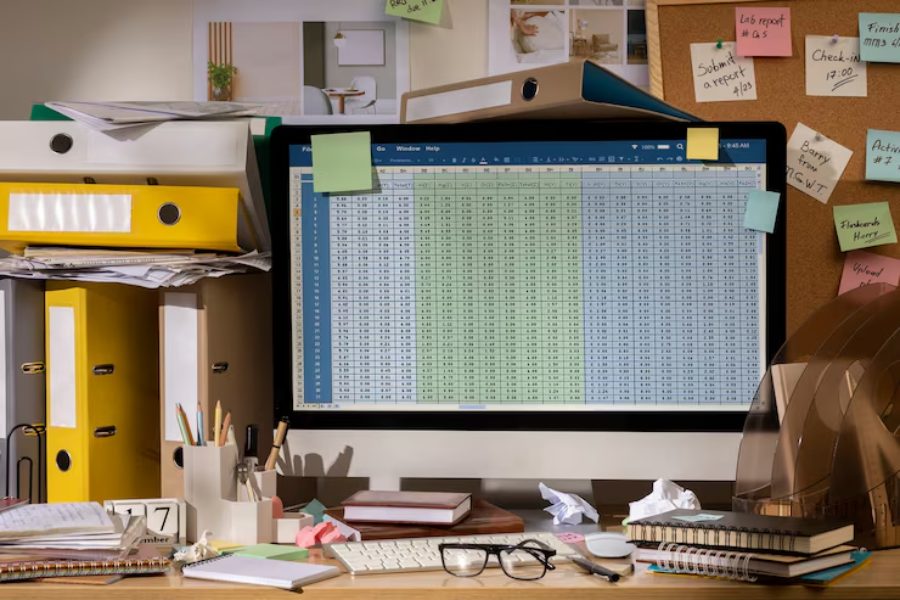
We’ve all been there: wrestling with endless rows and columns, trying to keep track of expenses, budgets, or even client data in a spreadsheet. It’s a familiar scene, right? But here’s the thing: as we move deeper into a digital-first world, relying on manual spreadsheets is becoming less and less practical. In fact, they’re starting to feel downright outdated.
So, why exactly are spreadsheets becoming a thing of the past? Let’s dive in.
1. The Rise of Digital Tools and Automation
The world of business is evolving, and fast. If you’re still managing data manually or sticking to outdated systems, you’re likely falling behind. Over the past decade, digital tools have gone from being nice-to-haves to absolute essentials. Thanks to automation, tasks that used to take hours or even days can now be done in seconds.
Think about it: how much time do you spend entering data, double-checking for errors, and trying to make sense of cluttered cells? It’s exhausting, isn’t it? That’s where digital tools come in. They can handle everything from simple calculations to complex data analysis, all in real time. Imagine having the ability to access your data from anywhere, collaborate seamlessly with your team, and reduce human error, all at the same time.
As businesses scale, relying on spreadsheets becomes more burdensome. At this point, switching from spreadsheets to accounting software can be a natural step to simplify financial management, improve accuracy, and ensure scalability in a digital-first environment. Doesn’t that sound like a relief?
2. The Limitations of Manual Spreadsheets
Let’s face it: spreadsheets are often more trouble than they’re worth. Sure, they get the job done in the short term, but what happens when things get more complicated?
First off, manual data entry is slow and error-prone. One typo can throw everything off, leading to hours of work to track down the mistake. And as your business grows, your spreadsheets grow with it, until they’re so bloated and disorganized that you can’t make sense of them anymore. Sound familiar? It’s frustrating.
Another big issue is collaboration. How many times have you emailed a spreadsheet to someone, only to receive an updated version back with changes that didn’t quite line up with what you had? When you’re working on a document that’s constantly changing, keeping track of different versions can be a nightmare. Plus, if you’re not using the latest version, there’s a risk that you’re making decisions based on outdated data.
And then there’s security. Storing sensitive financial data in spreadsheets can be risky. They’re not built to protect data the way modern tools are, and if you’re not careful, you could find yourself exposed to security breaches.
3. The Transition to More Efficient Solutions
Okay, so we know spreadsheets have their flaws. But what are the alternatives? Enter the world of digital solutions that are making spreadsheets feel like ancient history.
The shift to digital-first tools is already happening. From cloud-based project management software to comprehensive accounting platforms, businesses are moving toward tools that not only save time but also provide more robust security and data accuracy. These solutions allow for real-time collaboration, automatic updates, and easy access to data, making them far more reliable than static spreadsheets.
But it’s not just about replacing one tool with another. It’s about making your business operations smoother, faster, and more flexible. These tools are designed to grow with your business, and that’s something spreadsheets just can’t do.
4. Benefits of Switching to Advanced Tools
So, what exactly do you get when you ditch spreadsheets in favor of more advanced solutions? Quite a lot, actually.
Efficiency: These tools automate a lot of the repetitive tasks that used to eat up your time. Instead of entering the same data over and over again, you can let the software handle it for you. That means fewer mistakes, less time spent on mundane tasks, and more time to focus on growing your business.
Insights: When you’re using advanced software, you’re not just entering data, you’re gaining insights. With powerful analytics tools, you can track trends, generate reports, and forecast future performance without the headache of manually sorting through rows of numbers. It’s a game-changer.
Security: Modern tools are built with security in mind. Whether it’s data encryption or automatic backups, your information is much safer than it would be in an unsecured spreadsheet. No more worrying about losing your work or, worse, exposing sensitive information.
And, of course, these tools are designed to scale with your business. As your operations grow, the software adapts to handle more complexity without breaking a sweat. This means no more spreadsheets that get sluggish or unmanageable as you add more data.
Conclusion
In today’s fast-paced, digital-first world, relying on manual spreadsheets just isn’t practical anymore. They’re slow, prone to errors, and don’t offer the collaboration, security, or scalability that modern businesses need. By adopting more advanced tools, you can not only save time and reduce mistakes, but also unlock powerful insights that help you make better decisions.
The digital age is here, and it’s time to leave spreadsheets in the past. Make the switch, and your business will thank you for it.